Showing posts with label #finance. Show all posts

eCCRIS by Bank Negara Malaysia - a way to check for fraud and your financial status

One of our friends contacted us and discussed about an experience of being scammed. Nothing was lost, fortunately but all the stress and sleepless night endured are a reminder to us that there are certainly many unscrupulous syndicate out there waiting to fish our hard earned money.

Bank Negara Malaysia (BNM) has years ago came out with some remedies and a portal for us to monitor our financial standing. This includes knowing one's payment track record for the past 12 months, total outstanding amount and monthly payment amount. If you've forgotten, it's called the eCCRIS. 

Below is a snap shot of eCCRIS and the link to it is https://eccris.bnm.gov.my/eccris/

Snapshot of eCCRIS of BNM


From the snapshot above, you can see that the details are being provided:

1. When the credit facility is being approved
2. Name of Financial Institution
3. Is it a Joint or Individual account
4. Financial Institution Branch
5. Account number
6. Total Outstanding
7. Instalment amount 
8. Any arrears for the past 12 months (0 means no and 1 means missed or late payment for that particular month)

Just in case you're wondering how the log in page looks like, here you go:

Log In Page of BNM's eCCRIS


Phillip Futures - 2021 Outlook: Post Covid and Beyond

One of our authors has attended the Phillip Futures Webminar yesterday and they have shared the content via Youtube. Do take note that this is shared by Phillip Futures Sdn Bhd to the public. Ant On The Street  shall not be liable for any reader's actions nor take any credit for the viewpoints shared. 


Views and Projections for 2021 - Equities, Economies etc

As we enter into Year 2021 with lots of hope, various world-class analysts has came up with views and expectations for the Year 2021. What I remember clearly in Q3 and Q4 2020, we were often told that World's GDP will be the greatest at 3+%, which is never seen for the past 10 over years. Malaysian economy was 'expected to grow at 7%!'. Fueled with such optimism, we ended Year 2020 with pretty good returns in the stocks and indexes for almost all major stock markets.

However, as the days continue to pass in 2021, we realized that reality is fundamental will 'rationalize' the stock prices. Those who overshot their fundamental will have a pullback and those undervalued ones will play catch up. The recent political developments, rising COVID19 cases and resumption of Regulated Short Selling does a big impact on Malaysian stocks. 

In this article, I will share my thoughts and views on how 2021 will likely pan out. None of us have a crystal ball hence we are 'guesstimating' and 'forecasting' and after that place 'our bets' in the stocks or financial instruments that we believe will do well.

1. GDP Growth
My personal view is that the world's GDP will not bounce back >3% as per the optimistic economists think. The reason is due to point no. 2 on vaccine. Demand destruction sometimes is harder to recover and it will definitely take time. However, as Year 2020 caused the world's GDP to drop to a level where we were 2 years ago; from the lower base, it's definitely expected that the world's GDP will continue to rise but at a slightly more moderate ~2.8-3% instead of >3% that some economist forecasted. 

The caveat is however if Oil Prices (both Vegetable and Crude) keep increasing, it might cause a higher GDP (as a lot of countries like Saudi, Malaysia, Brunei's GDP as very tied to commodity prices). The more bullish economists of >3% might come true should Crude Oil stayed above USD55bbl and Soy and Palm Oil being the largest vegetable oil stays elevated for a longer period of time. 

2. Vaccine and COVID19
The vaccine roll out will be quicker in more developed countries (it's currently proven that mRNA technology is more effective and it needs colder storage temperature). However, the poorer countries will have difficulties accessing. This will continue to cause more lockdowns, more death and lower productivity as work places will need to shut down, movements of people being restricted to slow the spread of the virus.

I believed that COVID19 vaccines based on mRNA will be more successful than the traditional approach of muted virus and cause less side-effects. The downside is the logistical and storage temperature challenge. It will hence take a longer time and benefits the larger, more advance economies. Due to this, more advanced countries will get to move around earlier (will lead to faster economic recovery) vs poorer and less developed economies. 

3. Political Stability
US Presidential election just ended with Joe Biden set to be next President. There will be some changes to policies but it seems at the moment that US "fight against China" will continue. It is expected that any maneuvers be more predictable and not as chaotic as before (i.e. officials being sacked via Tweets). 

Malaysian Politics will continue to see a lot of changes, volatility and a big potential of GE15. Sarawak election might coincide with GE15 but all depends on the COVID19 cases and vaccination programme. Until a stable political alliances is found between PKR, DAP, PAS, UMNO, Bersatu, GPS etc and proven that the coalition can work, it'll continue to be chaotic and unstable. The results coming from GE15 will lay a foundation on whether the cooperation might continue or not.

Worldwide wise, it'll continue to see some volatility and changes in political arena. However, with the big brother US and China now seems to have a more stable political footing, it can be seen that policies making and agreements can be expedited or discussed extensively, which is good for world economy.  


4. Defaults/Shocks
There is an inherent risks of continued defaults especially in the SME arena. Also, in industries like Travel, Tourism, Restaurants and Hotels, Airlines which are hit the worst. The trend might continue and the increased in debt (due to debt payment deferment) will continue to 'haunt' the industry as they will have more debts to service going forward. 

Remember that any form of loan moratorium is just to defer your payments but the outstanding amount will increase. This although will bring hard hit companies through the 'winter' but they will spend a bigger amount of profit paying back debt later on.

5. Tourism
Tourism sectors including airlines and restaurants will continue to suffer at least for 1H 2021. Local tourism will resume first, estimated to be from May-June 2021 for more advance countries and year-end for poorer countries due to the slowness in the reach of the vaccines. 

International Travel is expected to restart in Q4 2021 but destination will be the more developed countries where the majority of the population has gone through vaccination. Countries who still have not vaccinate at least 80% of their population might face difficulties in attracting quality tourists and will have to rely on neighbouring countries or domestic tourists.

Stocks: Are Plantation stocks still worth looking at (with the current CPO prices hitting new highs)?

We have seen that there are many people calling for "buys" on the plantation sector due to the rising CPO prices. If you wonder where to find out on the latest CPO prices, they are mainly transacted via futures. FCPO is Malaysia's main platform to trade CPO and take delivery in future months. Hence, FCPO remains a good gauge on what will be the price for the future prices of CPO.

Below is the snippets of FCPO prices as of 28/12/2020
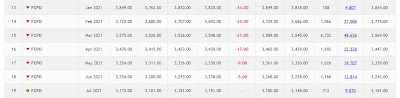
FCPO prices taken on 28 December 2020

So, are Plantation stocks a buy now? Let's look at the facts below before we answer the question:

1. Plantation stocks are normally trading below NTA (P/NTA of 0.3 to 0.8 times - depending on plantation size, location of landbank, productivity/age-profile of trees, lands' proximity to development and production cost per tonne). 

2. Plantation stocks are very cyclical and it normally has an uptrend during the CPO commodity price bull runs (due to a swell in earnings and potential dividend). 

3. Some of the Plantation companies like Genting Plantation, IOICorp has emerged into a developer as well due to their land being very close to "development areas". Places like Kulai and Puchong are being developed by Genting Property and IOI Properties as they were ex-estates. 

4. Production costs of FFB (Fresh Fruits Bunches) are estimated to be ~RM1,800. Due to logistical issue, cost structure of some more rural located plantation companies (especially at Sabah, Sarawak) has a slightly higher cost structure. Labour costs in peninsula Malaysia is slightly higher but at East Malaysia logistical issues often balloon the costs and also caused some FFB to degrade (hence commanding lower prices or even being dumped). 

5. Some of the bigger companies like FGV, TSH has landbanks and operations outside Malaysia (mostly all in Indonesia). Sime Darby Plantation has acquired NBPOL in 2015 hence they now operate and own palm oil plantation in Papua New Guinea. 

6. The fruits from the trees can be harvested, sent to the oil palm mill to produce Palm Oil. That is the priced asset. A young tree (normally defined as <7 years old) will yield very little FFB. Trees with age profile of 7 to 12 years old are normally deemed as young matured trees and I have read and seen some producing up to 18 tonnes/ha. The prime is said to be from 10 years of age until 23 years old where they can produce 18 to 25 tonnes of FFB/ha. This is again depending on the tree species. However, the machineries, mills and land cannot be monetize instantly. Land will take a longer time to be monetized as they need to be rezoned for other developments, divided into smaller plots and sold. The process usually take years to complete.

7. 1 tonne of FFB now sells for RM3,800 vs average production costs of RM1,800. The profit is tremendous as compared 9 months ago the average price is <RM2,500/tonne. 

8. Some of the Plantation companies are very illiquid and thinly traded. 

9. Tree stress will normally cause lower production after several months (6-9 months) of good production. Of course, dry weather is another root cause (while wet weather caused floods and harvesting issues leading to eventual reduction in production). This is one good reason on why CPO production and prices is always cyclical.

10. Windfall tax will be activated by Malaysian government (>RM3,000/tonne) and this is also a natural curb in profit. It's reported that in Jan 2021 a 8% Windfall tax will be collected.

Let's see how the companies in Bursa are being valued right now?

A truncated list of Bursa listed Plantation companies (filtered based on Market Cap)

Based on the filtered list above, you can see that the biggest players include Sime Darby Plantation, IOI Corporation, KLK, Genting Plantation is trading at P/B value of >1. One can always argued that the land have not been revalued over the years and if revalued now the book value can be higher, hence reducing the P/B value. 

In terms of P/E ratios, it might not be meaningful as months ago CPO prices were low and naturally profit is bad. 

If you observe well, most of the companies have gone up from their 52 weeks low and now trading almost at their 52 weeks high. 

Concerns

1. The share prices of most Plantation companies have risen and almost at their 52 weeks high. There is always a concern that despite the very likelihood in the hike in profits for the listed Plantation companies, it has already factored in all the good news. When the results come out, not all companies will report terrific profits (due to labour shortage factors, some companies' trees are either too young or old, logistical issues due to bad weather in Q4). Those who reports good profits might not experienced a sharp share price increased. 

2. Some plantation companies like JTiasa etc has pretty weak balance sheet. Some of the East Malaysian companies also involved in timber business and that segment of business wasn't doing well. 

3. Normalization of CPO prices. We can say that prices are market driven, so when prices rises it is due to sustained demand of CPO, the hike in price will dampen demand as well. Lower demand and potentially increase in production in coming months (especially after lots of rain from Sept onwards) could drive prices down.

4. Strengthening of Ringgit against US Dollar might put some pressure on CPO prices. The next edible oil which competes neck-to-neck with Palm Oil is Soybean and it's grown mainly in the West. Buyers buy CPO in USD and hence when RM appreciate, we will have to lower the price to compete with Indonesia.

Outlook? Is it still a buy now?

It is a difficult question to answer but our views are as below.

1. It is still possible to earn 10 - 30% profit by buying into Plantation companies. However, hoping for the stocks to double or triple up might be irrational (might happen in irrational market anyway). 

2. CPO Prices are set to come down after March 2021. The highest should be Jan 2021 which is around RM3,750/tonne.

3. Stocks are trading with a 6 months lookahead. Hence, it might be forecasting a reduction in profit going forward already. A good quarterly result might not help much in stock prices. It's the "Greater Fool's theory" in play right now as we also need to ask ourselves who is willing to buy at a higher prices.

4. If you use the "margin of error" methodology, you might not be comfortable. Margin of error might be lower now due to the price hike. 

5. If you want to take a bet, cherry-picking is the right way forward. Do make sure you read up the production of the Plantation companies (from Bursa's website as all plantation companies are required to post their monthly production figures).

Stocks: Why Index keep going up? And why it's not easy to beat it.

Warren Buffett has once mentioned: "In my view, for most people, the best thing to do is to own the S&P 500 index fund". He further believes that it's very difficult for most people to 'beat the index'. All of us were kind of puzzled and myself included has been asking the question on why is this?

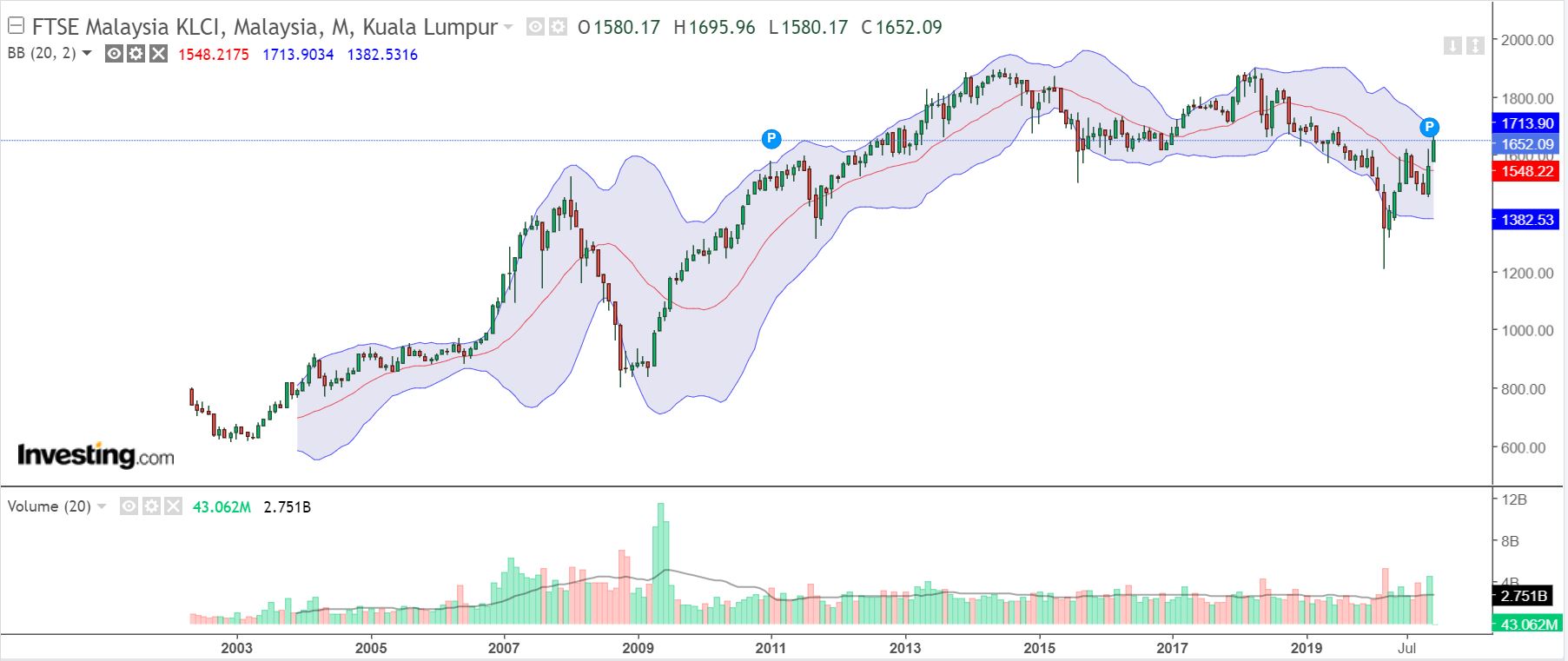
An overview of historical KLCI and S&P500 chart:


After some hard thought process and discussions, we believed that the below are the reasons on why Indexes typically is on a long term uptrend (Japan excluded as they are the only one country in the world which faces long term deflation and hence financial products prices drop):

1. Indexes are being reviewed from time-to-time. Those who did not meet the criteria (i.e. free float, market capitalization) will be eliminated. However, when business is better they might be re-admitted again. Wikipedia (https://en.wikipedia.org/wiki/List_of_S%26P_500_companies) maintains a very good list on the current S&P500 component companies and the updates to it. The review process is already like a 'quality' screening of companies where ailing businesses will be removed and new and thriving businesses will be added.

You can see that only the fittest will "survive" being maintained in the index. This means that it's an auto elimination of businesses that were not doing well, either in the sunset industries or they have lost their competitive edge etc. Also, we know that size matters when it comes to businesses. Although the biggest companies may have higher cost structures and unable to grow as fast as a younger and smaller company, but the mid-to-bigger sized companies (that is likely to be included in S&P500) will have a higher chance of success as they already have competitive edge against their competitors (hence they can grow into the mid-to-bigger size) and have sufficient financial capabilities to do R&D (this is key to survival of a company). 

Notably, due to Technology sector's growth, more and more Technology companies are included into the index while old-school brick and mortar businesses and being kicked out.

2. Companies which are part of indexes are typically 'valued higher', including having higher P/E ratios, P/NTA etc. As index funds these days are gaining momentum, index fund managers have to buy stocks in order for the fund to 'mimic' the index. Hence, there is always demand for index-linked stocks.

3. Index-link stocks and companies does give business partners, investors more confident. Better investors' confidence will lead to point 2 as above while better business partners' confidence will mean that the ability to take loans at a cheaper costs, having slightly longer credit period and better consumers' confidence would also means better sales. 

Tesla, during the early days suffer in brand image and now that it has been included in S&P500 would bring better consumer confidence. The perception will be that it has to be a stable company to be included in S&P500. Similarly, stock prices will take a heavy beating should the stock be removed from the index. Don't be surprised that business might suffer as well post removal from index as customers' perception might be negative towards the company. After all, business is all about 'marketing and image' isn't it?

4. Other than Point 1, most importantly, these big and stable companies keep growing sales and profits, hence their share price keep rising to reflect that. Think of US companies (Google, Amazon, Microsoft, Intel, AMD, Qualcomm, Apple) and Malaysian companies (PB Bank, Maybank, Tenaga, TM, Hong Leong Bank), these companies still manage to grow decently despite their size. 20 years ago we are all talking about Intel Pentium III processor based computers with CRT monitors but today we talked about iPad, Laptops etc. However, companies like Microsoft keep evolving and they have Ms Surface, yearly subscription service of their Office products (Office 365) and offer cloud storage which wasn't in existence 20 years ago. 

For those "old-school" technology companies, they reinvent themselves and came out stronger. For example, Google, Microsoft and Apple reported that "Cloud Computing" is the segment that grows 'double-digit' consistently for the past 3 years. While Google is a newbie but Microsoft and Apple were in computer business since 1970s (the era of Wintel vs Apple). If you look at Microsoft (1986 @ USD21) and Apple (1980 @USD29/share) share price, you will definitely slam the table hard for not putting your money in. After many splits, the USD21 you paid for Microsoft is USD0.10 and at current share price of USD222, it means that a USD1,000 would turn into a hefty USD 2.2mil!

5. The world economy is growing, with exception of Japan where they experienced 20 years of deflation. This will link to the points above that coupled with inflation, profits of companies will keep increasing.

Conclusion
Index investing has not only becoming a trend but for the lazy and less-skilled investor, it become a natural choice. Beating the index is one of the harder things to do as index provides sufficient diversification, 'quality' selection done from time-to-time (i.e. every 3-6 monthly). 


Top 20 Warren Buffett's Famous Quotes

Like I mentioned in my previous articles, there is no "right and wrong" in investment as long as it earns you money. However, there are some notable ways that  you may earn your money in a 'safer manner' rather than relying on lady luck. 

Warren Buffett's investment ideology champions value investing and contrarian investment. Let's see what are Buffett's top 20 famous quotes and remind ourselves again on the basics of investing.

1. Rule No. 1 is never lose money. Rule No. 2 is never forget Rule No. 1.

2. Price is what you pay. Value is what you get.

3. It's far better to buy a wonderful company at a fair price than a fair company at a wonderful price.

4. The key to investing is not assessing how much an industry is going to affect society, or how much it will grow, but rather determining the competitive advantage of any given company and, above all, the durability of that advantage.

5. We simply attempt to be fearful when others are greedy and to be greedy only when others are fearful.

6. The best thing that happens to us is when a great company gets into temporary trouble...We want to buy them when they're on the operating table.

7. Someone's sitting in the shade today because someone planted a tree a long time ago

8. If you aren't willing to own a stock for ten years, don't even think about owning it for ten minutes

9. When we own portions of outstanding businesses with outstanding managements, our favorite holding period is forever

10. I never attempt to make money on the stock market. I buy on the assumption that they could close the market the next day and not reopen it for five years.

11. Should you find yourself in a chronically leaking boat, energy devoted to changing vessels is likely to be a more productive than energy devoted to patching leaks.

12. It takes 20 years to build a reputation and five minutes to ruin it. If you think about that, you'll do things differently.

13. The most important quality for an investor is temperament, not intellect. You need a temperament that neither derives great pleasure from being with the crowd or against the crowd.

14. I believe in giving my kids enough so they can do anything, but not so much that they can do nothing.

15. Don't get caught up with what other people are doing. Being a contrarian isn't the key but being a crowd follower isn't either. You need to detach yourself emotionally.

16. The best chance to deploy capital is when things are going down.

17. Never invest in a business you cannot understand.

18. Risk comes from not knowing what you're doing

19. In the business world, the rearview mirror is always clearer than the windshield

20. Read 500 pages like this every day. That's how knowledge works. It builds up, like compound interest. All of you can do it, but I guarantee not many of you will do it.

Conclusion
His quotes are words of wisdom after over 75 years of investing. One can argue that Buffett lives in an era where inflation, growth, opportunities are all higher and his recent years bet aren't that successful. However, if you read my list of Top 20 Warren Buffett's famous quotes, you will realize that it talks about personal education/learnings, views on risks and how to tackle risks in investment, cutting losses and even money issues in raising kids. 

As a human, I always believed that we ought to review what we have done especially during this year end break and holidays. Review the year and have a vision on the next. All the best folks!

2021 Stock Markets Outlook: Key takeaways from Principal Webinar (Positioning for Recovery in 2021 Part 2)

As an active investor in few fund houses, one is frequently invited to Investment seminars and events. Due to the pandemic, this year Principal Asset Management had a series of webinar. One of it is titled: Positioning for Recovery in 2021 (Part 2). which was held on 16th December 2020 at 8.30pm. For the benefit of all readers, we are going to summarize the key takeaways from it. 

Just some disclaimers here: The author is not responsible for any errors made while translating information given in the Webinar. The views were provided by the fund house and AntOnTheStreet shall not be held accountable or responsible for any accuracies of information provided in this article. Readers are advised to exercise their own judgement before making any purchases in stocks or unit trust funds. 

Due to copyright issue, we will not be able to share you the snapshots of the slidepack in this article. However, you may keep in touch with us should you want a copy of it and it's possible to do it privately.


Key Takeaways
1. China will continue to dominate world's growth in Year 2021. At least 1/3 of World's growth will be coming from China

2. Key risk will be if vaccines don't work or have issue. Current equity rallies factored in vaccine will work.

3. Principal has grouped the Year 2021 investment theme to: Renewal, Revitalize and Recovery.
  a. Renewal: new practise and right technology is deployed to address past weaknesses and to meet future demands.
  b. Revitalize: resume conducting business in new eco-system facing new demands from competitors, customers and business partners.
  c. Recovery: economies and companies leveraging on respective comparative advantage to generate better profitability/income.
To reposition into the 3Rs themes. Also, in biotechnology and technology sectors as their role in human day to day life will keep on increasing.

4. 2020 Q4 company results (due in Jan & Feb 2021) for European markets and some parts of the world might not be pretty (mobility chart shows that further lockdown caused reduced mobility). However, the speaker is unsure that it'll caused a big dip as markets might just look past the slowdown.

5. China's economy continue to transform from export based to services based and domestic consumption. The social migration (lower income to middle income) will continue to support demand for higher value products (i.e. branded shoes, cars, housing)

6. EPS expected to grow strongly in 2021, with China leading the pack followed by ASEAN countries. The rest of the world will also recover fast but expected to be slightly lower than China and ASEAN region. World's GDP is expected to grow ~5% (vs previous yearly average of ~2.4%) 

7. Expect markets to be less volatile as Biden will behave like 'a traditional president', no social media storms issues.

8. 2021 world's fiscal policy will remain supportive and not many countries will raise rates. Some countries might still do one more round of rate cuts and stimulus while some might do a small rate hike if economy stabilizes. 

9. Raw materials prices will do well due to increased demand. This includes metal, silver, oil, gold etc.

10. There are observations from majority of companies that they are seeing positive margins from Aug onwards. It was understood that before that a lot of facing negative margins. Hence, the companies are able to do proper business planning (i.e. starting to plan for expansions, upgrades etc). This is reflected in PMI numbers throughout the world.

11. When asked on "Any recommended Principal Asset Management fund to choose from to benefit from the Recovery in 2021". The speaker is bullish on Principal Greater China Fund (due to bright outlook in China). However, due to Portfolio and Risk Management issue, it's recommended to diversify into Asia Pacific Dynamic Income, Growth, Millennial Equity or ASEAN (China-Indonesia-India Fund).

How companies can make more money after an economic crisis?

Have you ever wonder that there is always a economic crisis and it always followed on with a recovery. And the thing is it's not just any ordinary recovery but stock indexes hitting new highs, property prices spiking etc. This probably is a testament of the saying "what doesn't kill you makes you stronger"! 

Now, let's explore why we always have a recovery after an economic storm? And also how can companies make more money after an economic crisis?

1. Companies are allowed to reduce manpower and salaries during a economic crisis. This will bring down the cost of doing business. Staff is not able to jump over to other competitors easily and forced to accept a lower salary.

2. There are many not so efficient companies forced to shut down permanently. Those who survive will have less competitors to compete with. Those mom and pop shops, those already ailing businesses will be forced to shut during the time of crisis as they are unable to sustain (and profit) even during the good times. The ones left will certainly have better pricing power and consumer might not have a choice but to purchase from the companies and businesses that has survived.

3. It's a human psychology thing - during an economic crisis, people cut back on spending mainly due to fear of losing the job. The "fear of losing their jobs" actually caused job losses and slows down the economy. Hence, when in an economy recovery, people are tired of eating at home (to save costs), reducing holidays and buying gadgets etc, they will start to come out and spend. Once spending comes back, businesses naturally have to hire more people. When more people have jobs to do, spending will go up and malls will be full again. It's a continuous cycle.

4. Companies generally will use this excuse to conduct re-organization, reduce wastages, review contracts, rationalize capital programme and spending. If you work with a mid-size company, you will certainly notice that during good times there are a lot of unnecessary spending (think of your photocopier service, allowances, business travels). If you add those things up then you will realize that it'll lead to a meaningful savings. Every penny saved is money earned. 

5. Some companies will take the bold step to explore new market, new demand during an economic downturn. It's a time where the staff will have less work to do and it's an opportunity to utilize them to explore and look at other new exciting opportunities. This might lead to new venture, new subsidiaries formed and new partnership. 

6. Input costs are lower during an economic crisis and many times you can see the selling prices of products rise faster than the input costs, hence causing a surge in profit for businesses. For example, oil refineries, steel millers, plastic products manufacturers all relied on inputs from oil, iron ore etc. During an economic crisis, the raw material price is always low due to the drop in demand. 

7. Most companies does Kitchen Sinking during an pandemic. It is painful and management will grab the opportunity to do so. For those who is unaware of what is Kitchen Sinking, it include write-offs (i.e. stocks that is too long in warehouse) and impairment/write-downs (i.e. asset prices like property, car values which has plunged during an economic downturn). We have seen companies after the dreaded economic crisis, part of their profit actually came from "reverse impairment". Think about this, during an economic crisis, some companies will be forced to value their land and buildings lower to reflect the current market value. When economy recovers and roaring again, the land and building prices will go up and companies will have to revalue them again. This revaluation exercise will lead to additional "profit" as part of accounting requirements.

Stocks: Boustead Holdings Market News and Rumours Compilation

There are many market rumours about Boustead Holdings Berhad 'potential' cooperate exercise. Below are the compilation of the news and we will do a quick analysis on those news and market 'speculations'

1. Boustead Holdings is looking to sell its shares in unlisted "The University of Nottingham in Malaysia Sdn Bhd". 

The University of Nottingham in Malaysia Sdn Bhd's sale (66% ownership) is probably one of the few options that Boustead Holdings is looking at with the target to reduce their debt, increase cash flow and most importantly simplify the company to generate profit.
https://www.theedgemarkets.com/article/university-nottingham-malaysia-owners-weigh-exit-%E2%80%94-sources


2. Boustead Holdings has named Shazalli Ramly as the new Group MD. 
https://www.theedgemarkets.com/article/boustead-names-shazalli-ramly-group-md-confirms-edge-report
The incoming MD is said to be tasked to continue with the journey to rationalized the company's effort to streamline their holdings and assist it to return to profit.

3. Boustead voice support for BHIC reporting irregularities involving the RM9bil combat ship project
https://www.theedgemarkets.com/article/boustead-voices-support-bhic-reporting-irregularities-involving-rm9-bil-combat-ship-project
While the news is definitely not welcomed and RM9bil contract (with potential mismanagement etc) is a lot of money (few times above Boustead Holdings Berhad's market cap), it is likely to be limited to BHIC as the subsidiary is the ones given the contract. The key risk remains the reputation damage as it's associated with Boustead's name.

4. Boustead Holdings expected to embark on major debt restructuring
https://www.theedgemarkets.com/article/newsbreak-boustead-holdings-expected-embark-major-debt-restructuring
From the below article, you can see that The Curve and its surrounding land (which Boustead Holdings owns) has only a book value of RM579mil. 

Quote from the article:

"Non-core assets that are likely to go

All eyes are on which non-core, low-yielding assets Boustead Holdings may sell. The group is asset-rich, with landbank, investment properties and hotels, among others. Observers say it is unlikely that it will sell its shareholding in Affin Bank.

“Affin Bank is not only profitable, but of value to the group, so I doubt it. I expect they would sell some of its property assets such as land and/or property management and some of the Royale Chulan hotels. They also have a stake in the MyTown mall, which is low-yielding,” says one who tracks developments at the group. Boustead Holdings has a 50% interest in MyTown Shopping Centre in Kuala Lumpur.

While there is concern that Boustead Holdings’ assets may not be able to fetch a good price amid the current economic downturn, it is understood that the group does not plan to sell them in haste.

In its 2019 annual report, topping the list of the group’s most valuable properties is five hectares of commercial freehold land on which The Curve mall sits and the building, which have a total book value of RM579 million.

Boustead Holdings, which has been reporting losses since the financial year ended Dec 31 2018 (FY2018), saw its net loss widen to RM1.28 billion in FY2019 from RM554.3 million the previous year, after taking an impairment charge of RM1.33 billion for assets from the heavy industries and plantation segments. Revenue for FY2019 rose a marginal 1.4% to RM10.33 billion.

It had a debt-laden balance sheet, with total borrowings amounting to RM7.91 billion as at end-2019 compared with its shareholders’ equity of RM3.74 billion. Cash and cash equivalents stood at RM893.8 million"

5. Potential Privitisation
a. Comments in i3Investor's forum/comment section
There were plenty of comments in i3 portal claiming privatization of Boustead will happen before Feb 2021 at a price of RM 1.10. This is below the NTA but way above the current depressed prices. Whether or not the offer will come, when is it and will it get the the buy in of smaller shareholders (majority shareholder is LTAT), only time will tell.

b. Previous news on potential privitisation (in June 2020)
There are several announcements made on LTAT's intention to privatise Boustead Holdings and restructure it. This excercise will help in effort to pare down debts, rationalize non-core, non-performing assets (i.e. hotels, lands, shopping malls) and at the end make Boustead Holdings a leaner company with better profit prospects.

https://www.theedgemarkets.com/article/hurdles-mount-ltats-potential-privatisation-boustead

https://www.theedgemarkets.com/article/rm660m-deal-privatise-boustead-holdings


*The above comments are just research done by one of our contributors. All investors are advised to study and make their own recommendations before making any purchase of the stock.

How can Young Investors start Investing in Stock Market?

We were requested by some friends to share strategies on how they can start their investment journey. Understand that many are interested but have no or little clue on where and how to start. One of our authors has >13 years experience in investing in the equities market, he started young and is now investing and also trading various financial instruments. We have also shared in our previous article on where you can invest your money (legally)?

The aim of this article is to provide a simple step by step methodology to all our readers. If the way we approach investments does not align with what you have in mind, we seek your understanding as in the market no one is always right and we all learn with positive mindset and spirit. We also assume that the young investors would like to learn some fundamentals and invest in Malaysian stock market (i.e. Bursa Malaysia).

Step 1: Open a Trading Account 
There are a handful of trading platform providers including CGS-CIMB iTrade, HLeBroking, Rakutentrade. I3Investor does offer a list of trading platform providers that you can go through and select what is suitable for your trading needs.

Step 2: Learn Fundamental Analysis
There are a lot of things to learn in Fundamental Analysis. What you can do is to start with understanding of the terms below.
a. Price to Earnings ratio (P/E)
b. Net Tangible Asset (NTA)
c. Current Ratio
d. Return on Equity (ROE)
e. Earning Per Share (EPS)
f. Dividend Yield
g. Price/Earning to Growth ratio (PEG)
h. Price to Book ratio (P/B)

Learning Fundamental analysis is almost a lifelong process as we learn the various valuation methods of the companies (i.e. P/E, P/B or P/NTA, PEG, ROE, Discounted Cash Flow, Sum of Parts, Premium or Discount to peers and/or Book Value). There is no one fixed valuation method and it's often market driven and changes over time when there is new development to the business. P/E is the most used methodology and you will see that Analysts used various combination of methodology to value a company.

Step 3: Practice with a Dummy Account and familiarize yourself
Most of the trading platform providers has dummy account facilities so that newbies can practice trading or familiarize themselves with the system. Take advantage of this while you're learning the Fundamental Analysis

Step 4: Repeat Step 2 and 3 until comfortable with investing
You will need a certain amount of courage to use your own money in trading. So practice until you feel comfortable. You should also read books like 'The Intelligent Investor' and books associated with Warren Buffett. Look for books that are easy to read and understand. 

Step 5: Select a Stock and Start Investing
Step 5 may sound too easy to read than do - yes it is not easy for first timer. Which stock should you select and is the price right to buy now? Remember, "money is what you pay, value is what you get" - this is a famous quote in Value Investing Model. As this article does not intend to make anyone a value investor or momentum investor/trader, we assume that the first time investor will want to keep a stock for some time (i.e. a few months or years). 

Stock picking is difficult hence to ease that burden, do select companies that you know (i.e. Maybank, Genting, Boustead, SP Setia), you are comfortable with and that you believe have a good future (and business is either growing consistently or recovering from a temporary decline).


Step 6: Sharpen your skillsets and understand your personality vs investment
You will need to continue to learn new things and sharpen your skillsets. You may have know Fundamental Analysis and connect the dots on how they tie-in to the stock prices. However, you should continue to learn Technical Analysis where charts will 'hint' you on where is the 'entry' and 'exit' prices. 

You should also ask yourself what is suitable for you - are you going to be a longer term investor or day trading (not investment) is a better choice? It's a very personal question to answer hence I have no answer here for our fellow young investors. For me, I used a hybrid model where I have positions which I hold for a longer term (i.e. using Value Investing and Growth stocks methodology) and I trade some shares over few weeks cycle (i.e. using a combo of Technical Analysis and Fundamental Analysis). To add some thrill to my mundane day, I trade some derivatives like Futures (FCPO, FKLI, Mini-HangSeng Futures) as well. 

Bottom line is you will need to find out what is your "investment personality". However, a word of caution is the most successful investors "hold their position over a longer period of time". Those who got rich like Warren Buffet, Elon Musk, Jeff Bezos, Bill Gates have big positions (a lot of shares) in their companies and they didn't trade it (frequent buy-sell) like traders. Investing in a growing company will certainly yield you a lot of good returns but you will need to select the right stock (going back to Step 5). 

So, who says Investing is easy? No, it's not difficult but to manage an investment portfolio which consistently earns a good returns and beating the market is very very difficult. Even the professional managers have difficulty doing that. But as an encouragement, you will have to start somewhere if you are keen, else it will never happen. Good luck and take action today.

Stocks: Bonus Share vs Dividend - are they the same?

 Recently, we have a lot of market activities and a lot of companies start to 'dish out' bonus shares. One of the latest companies who is proposing a bonus issuance is Public Bank Berhad, our Malaysian home grown bank which has the lower CTI (Cost to Income) and NPL (Non-Performing Loan) in the industry regionally. Others include G3 Global, Amtel, UWC etc.

Public Bank Berhad intend to give out 15.53bil shares to the existing shareholders and the most important question is should you buy Public Bank due to the bonus issuance? The answer to this question is to answer what is a bonus share? 

What is Bonus Share?
Bonus shares are additional shares given to the current shareholders without any additional cost, based upon the number of shares that a shareholder owns. This will increase the issued share capital of the company. However, by increasing the number of outstanding shares, it decreases the stock prices. Bonus share issuance is a 'zero sum game' exercise as the market capitalization technically does not change and investor don't actually gain more vs dividend (although they might if the share price was manipulated upwards later on). There is no tangible payment out from the company's account to the share holders

I would lay down some tangible examples of the benefits of Bonus Shares:
1. Enlarged share base will means that there are more shares to go around for transactions. Hence, for smaller companies it will increase the liquidity.
2. The stock price will be lower and hence perceived as 'cheaper' for retail investors (please take note that in investing, we normally define 'cheap' as low P/E ratio, low P/B ratio, EV etc, not with reference to the price of the share - however, a lot of non-financially savvy and strong retail investors will still assume that 'cheap' means 'low price'). 

How about Stock Split? Stock split is the action taken in which a company divides its existing shares into multiple shares to boost the liquidity of shares. Both Stock Split and Bonus issue is almost similar except that Stock Split will reduce the Par Value of the share. This is merely accounting issue where small and retail investors don't see any tangible difference between these two exercise.

What is Dividend?
A dividend is the distribution of some of a company's earnings to a class of its shareholders. In layman's term, the company made a profit and it channel part of it to its shareholders. It's being paid out from the company's accounts to the bank accounts of the shareholders. It normally has a ex-date where shareholders who owns the share by the 'ex-date' will be entitled for the dividend. We have a lot of companies like Maxis, KLCCP, REITS, Banking who are consistent dividend payers. And these days, the dividends received from Bursa Malaysia listed companies are tax-exempted as tax has been paid at company level prior to distribution.

Is Bonus and Dividend the Same and Should you buy in?
The biggest question in the room will be how should you react to news like Company A is declaring a dividend while Company B is giving out bonus shares. We will explain with scenarios below:

If you buy into Company A (which declared a RM0.50/share, assuming you own 1,000 shares), you will receive a dividend of RM500 (RM0.50 x 1,000) before costs of processing. Your share price will not be adjusted. However, sometimes post dividend the share price will drop a little as investors will have to wait 3 or 6 or even 12 months for the next dividend. 

If you buy into Company B (which declared a 1-for-1 bonus), you will not get any cash in your bank account. Assuming that the share price is RM1.00 and you have 1,000 shares. The share price will be adjusted to RM0.50 and you will have 2,000 shares post Bonus Exercise. The outcome from the result is it will be the same (RM1.00 x 1,000 = RM0.50 x 2,000). However, there will be some advantage as I mentioned above especially if you are holding a small cap stock with limited liquidity. There will be more shares to go around for investors to trade. 

I hope the explanation above will provide some insight to investors to learn and distinguish the difference between bonus and dividend. All of us (myself included) will start as a piece of white paper and we fill ourselves with knowledge as we grow in our investing journey. 

Stocks: The Market Cycle Clock

In any investments, there is always ups and downs. In fact, due to the correlation of economies, various commodities, demands etc and most importantly is human psychology, the market cycle clock sort of repeats itself over time.

We have seen a bust of the stock markets throughout the world due to the "black swan" event of Coronavirus causing major health crisis. The response to the health crisis inadvertently caused a very major economy slowdown and hence being reflected in the stock market. We, the humans responded to the health crisis by restricting people movement (interim measures) and researched for vaccines (long term solution). You can see that during the period of March till May, there were major corrections on commodities prices, property prices and stock prices. And once the vaccine news came out, the market reacted like nothing has happened and begin rebounding aggressively (bear in mind that none of any country has started massive immunization against coronavirus). However, it's always said that stock markets is trading with a 6-month forward looking. 

Let's have a look at the Merrill Lynch's Investment Clock below and see where are we? I remember I was looking at the same thing 10 years ago where we just emerged from the Global Financial Crisis (the crisis which started with home mortgages in the US in 2018 quickly spread throughout the world and by March 2019, most markets hit rock bottom).

Merrill Lynch's Investment Clock
Merrill Lynch's investment Clock

From the chart below, you can see those Asset and Sector Rotation over the economic cycles. The key question is where are we right now? At certain cycle, it might stay for a longer time and we might missed the opportunities by not making the right move.

Asset and Sector Rotation over Economic Cycle

Theoretical Economic Cycle - Output Gap and Inflation

The Market Cycle is very real but from what we have discussed, it's mainly for discussion and educational sake. Do use it as a guide for your investment portfolios. And a winning portfolio is normally held over time and not a short duration. Market timing remains something nobody is really able to master. For those who tried, majority has failed miserably.

Retirement Series: Golden Rules to a Successful Retirement Planning

In my previous Retirement Series articles, we spoke about retiring with RM2mil cash and RM3mil net worth. While those are the magic numbers where it will help thousands of Malaysian to retire but it will remain delusional or a dream. To make things easier to understand and achievable, we are going to look at ways that you can plan your retirement successfully.

Golden Rules to a Successful Retirement Planning
1. Start Retirement Planning the day you start your first job
The biggest mistake and misconception that everyone have is "I just started working and I am not going to retire in 40 years' time". I started to think about retirement when I was younger, way before I work. Of course none of us will know what kind of life you would want to live 40 years later but what you can easily do is to set aside a sum of money for retirement and 'rainy days'. What makes you think the government via EPF forced everyone to contribute at least 23% (11%+12% or for those earning below RM5,000 - 24%) of their income for retirement purposes? It's a form of forced savings that will help many in their older days. 

2. Any sum contributed towards Retirement Fund is welcomed
When you started out working, none of us will withdraw a big paycheck. Some fortunate ones will earn double to triple those working basic jobs. However, as the saying goes: "it doesn't matter how much you earn, what matters is how much you saved", it really is how much you save up. Just imagine is, a young man who spend his way out of a salary of RM4,000 with zero savings is worse off than a person who earns RM2,500 wages and save RM200/month. 

3. Try not to utilize the sum that you have saved up for retirement until Retirement happens
A lot of people saved money and they put all in a basket. When something turns up, they look into their "kitty" and say "hey I have got the money, let's buy a new fridge for Christmas" or "well, we have saved enough to buy a new car". Yes, it thrills us to spend the hard "saved" earnings but again, you will have to be clear like "money in retirement fund should not be touched" not unless you lost your job and have no where else to look for money to keep you going.

4. Hold on to "lifestyle" upgrades and continue living a frugal lifestyle as long as possible
It is easy for us when we have an pay increment every year and we actually "upgrade" our lifestyle and spend all of the increment. This normally involves the "want" category like I "want" Starbucks coffee because it's nice, I "want" to dine at a fancy restaurant thrice a month as "I can afford it". Yes you can afford them and not indebted. However, by holding back your "want", you are indirectly increasing your savings. That will tie-in well with Item 5 below.

5. Invest Retirement Savings as early as possible
Time is on your side if you start early and you can also invest a smaller amount. Below is a scenario for you to consider. If you're looking to have RM1mil at retirement (assume 60 years old), this is what you have to save monthly (assuming 6% return p.a.).
a. at 25 years old - RM 728/month
b. at 35 years old - RM1,478/month
c. at 45 years old - RM 3,485/month
d. at 50 years old - RM 6,154/month
e. at 55 years old - RM14,391/month
You can see that from the simulation above, it pays to save early and let "compounding gains effect" to help you. Don't get discourage with the numbers above as it also involves savings in EPF as well. Refer also to another article posted in the Ant On the Street Retirement Series blog.

Investing your money means that you don't keep your money in Banks only. Fixed Deposit is not really considered as "investments". Investments would mean vehicles like Unit Trusts, Mutual Funds, ETFs, Stocks etc.

6. Learn Financial Management and Investment early in your career life or even life!
Learning is lifelong as they say. Too bad we weren't taught financial management earlier in our formal education. We were taught finance, economics and other important subjects like science and math. Financial Management is one of the most important aspect in one's life. You see that a lot of people committed suicide, families torn apart or even those who went bankrupt due to illnesses or couldn't afford to have a proper roof over their heads at old age. It's very very sad to be in those situations but from studies done, majority of them is not due to poor luck in life but simply due to poor financial management. It involves a strong will, discipline and constant fight between "want" and "need".

7. Be bold and look for a better paying job.
Be bold and take the risk - a lot of us will prefer to stay in the existing comfort zone because we are familiar with the work. Grab that promotion, grab that pay increment even if it means heavier responsibilities and tougher work. Work hard for it as hard work is the only consistent answer to success. No doubt hard work does not always yield good outcome but it's the most 'consistent' way. And remember, when you get that promotion or pay increment, first thing is to save the extra money you get, not to go into a new car, new bigger house, new hobbies. 

With the above Golden Rules discussed, we hope that our readers will not only enjoy reading them but will benefit from it by practicing those rules in your daily life. Take charge of your financials today, a baby step forward is what you need. Remember, one step at a time, not a big leap.

Retirement Series:
#1: Can you retire with RM3mil Net Worth?
#2: How can you retire with RM2mil cash?
#3: What is your spending power with RM6,000/month
#4: Is it possible to build a Retirement Portfolio averaging 6% return per year without EPF?
#5: Golden Rules to a Successful Retirement Planning

Retirement Series: Is it possible to build a Retirement Portfolio averaging 6% return per year without EPF?

In my previous articles, we mentioned about how to strategize to retire with RM 2mil cash. In the article, I did mention that while we cap our expenditure at 4% of the fund size initially, the fund need to grow 5% -  7% on average in order to be sustainable (defined as: i. Fund will almost never run dry ii. at 4% utilization, it'll be able to catch up with inflation).

How did EPF performed (historically)?

EPF Historical Returns (Click to Enlarge)

From Calculations, we know that for the past 10 years, it averaged a 6.05% returns. If you take a longer view, for 20 years average (5.5%) and for 30 years average (6.2%). Hence, you can see that it fits right in the target of 5 to 7% returns which we are seeking.

Next, How Do We Set Up a Fund to Return us 5 - 7%?

There is no magic trick or short-cut to this but I am going to simulate using Unit Trust funds due to the following assumptions and reasons:
1. The person retiring wants to enjoy retirement and not bogged down by day-to-day market swings
2. The person is not working in Financial sector nor have advance investing knowledge and skillsets. By investing all his cash (outside EPF) directly into stocks and bonds, the person takes too much of risks due to potential poor management and lack of diversification.
3. The ease of diversification via Unit Trust into World's stock markets, bonds etc. 

Having investing in the stock markets and other financial instruments for the past 13 years, I will use examples of Affin Hwang Select Bond Fund, Quantum Funds, Principal Asia Pacific Dynamic Income & Growth Funds, Principal Small Cap Opportunities etc to simulate them. This is not because other funds are inferior but it's due to my preference and also familiarity with those products. I see good consistencies in the management of these funds as well although for Small Cap funds, typically the investor will need to do some switching/rebalancing due to the volatility of smaller capitalization stocks. 

In this study, I used FSMOne's Fund Simulator as a tool. As Principal does not let FSM carry certain flagship funds (i.e. Asia Pacific Dynamic Income and Dynamic Growth funds), I will leave it out and mention them separately.

Simulation #1 - For the 1st 10 Years (Following Ant's Retirement Model - 50% EPF, 25% Equities, 25% Bonds)

Below are just the portion of returns Excluding EPF.

Simulation 1 - composition of funds
Simulation 1 - outcome of the investments

As you can see from the chart above, staying invested and with zero rebalancing (no switching) gives you an average 10 year 8.76% returns! And with the RM1mil initially invested, it'll grow into RM2.3mil. The returns exceeds our target of 5 to 7%. However, do take note that the volatility is relatively high at 10%

Simulation #2 - For the Remaining Life (Following Ant's Retirement Model - 60% EPF, 10% Equities, 30% Bonds). This greatly reduce volatility and risks.

Below again is the portion of returns Excluding EPF.

Simulation 2 - composition of funds

Simulation 2 - outcome of the investments

By having a more conservative approach, you can see that by investing in the right products (i.e. Affin Hwang's Select Bond Fund), you still can get a whopping 7.21% average returns over a 10 year cycle. This is better than EPF's return (however, one cannot directly compare with EPF as it's 'capital protected' and mixed asset/multi-asset fund). 

We can see from the above scenarios that by setting a target of 5 - 7% for returns, it's not impossible and history has proven that it's very possible and even with the lower risk portfolio, it did went above 7%. 

Now, for the younger and bolder, if you're not into stock market investing, are you able to hit >8% compounded returns yearly? Let's see the below.

Snapshot of Asia Pacific Dynamic Growth Fund Fund Fact Sheet
Investing in Principal Asia Pacific Dynamic Growth Fund since April 2016 will gives you a return of 70% (4.5 years period)!

Snapshot of Asia Pacific Dynamic Income Fund Fund Fact Sheet
Investing in Principal Asia Pacific Dynamic Income since April 2011 will give you a whopping 196% returns! It will turn RM1 into RM2.96.

And for Simulator #3, by having a more aggressive portfolio, you will average a return of 9.96% over a period of 10 years. 

Again, let me set the record straight, I am not promoting any companies nor funds here but they are used solely for comparison purposes and to proof that it's possible to achieve your goals with these instruments. Hence, start investing today, no matter how old or young you are.  

We do have some friends and affiliates who are professionals in this field and if you do want to invest via them, it is possible to drop us a note. However, Ant On the Street shall not be liable for any actions of our friends and affiliates.

Disclaimer: I am not representing FSMOne, Principal Asset Management, Affin Hwang Asset Management or any funds mentioned above. The facts and figures may not be 100% accurate and solely for discussion and educational purposes only.

Retirement Series:
#1: Can you retire with RM3mil Net Worth?
#2: How can you retire with RM2mil cash?
#3: What is your spending power with RM6,000/month
#4: Is it possible to build a Retirement Portfolio averaging 6% return per year without EPF?

Exploring Recovery Stocks - Bursa Malaysia

There were a lot of talks recently that Major funds are moving their money from Technology sectors into Recovery stocks. We know that a lot of Technology stocks have enjoyed high valuation and I suppose this rotation play is inevitable looking at the development of demand recovery to the rest of the sectors who experienced terrible set backs due to COVID19. Sectorial play or rotation play is common in stocks and typically stock markets look at 6 months down the road or at least trying to predict what will happen 6 months later.

So, just to be sure, what are really Recovery Stocks or Recovery Sectors? By definition, these are the companies which experienced significantly lower sales, lower profit (or even losses) and after the event which triggered the downturn eases it'll bounce back. Let us look into these sectors as below:

1. Retail Sector
Retailers like Padini, Bonia, AEON all suffered significantly lower sales during this pandemic as people stayed at home more, wear less formal wear (even their shoes get worn out less). Many retail shops are relatively empty and relied on online shopping. However, we understand that sales are typically down and some companies in the retail sectors experience losses due to lower revenue but no reduction in operating costs (in fact some went up as they have to fulfill the physical distancing and sanitizing requirements).

2. REITS
Malls and office spaces were always one of the most stable sector during any economic downturn but this one driven by COVID19 pandemic is very different. Due to restrictions, malls suffer a great deal and now most of them barely has 50% of their regular foot traffic. The likes of IGBREIT, CMMT, Pavillion REIT, KLCCP, Sunway REITs are your choice for investment.

3. Oil and Gas
Oil and Gas sector is a very unfortunate sector which experienced a recent crisis in 2015 and now in 2020 again. There are significant drop in usage of petroleum products as people travel a lot lesser (i.e. almost 90% of all flights are cancelled in the world and people are forced to stay at home instead of driving to work or for holidays). Companies like Hengyuan, PetronMalaysia, Muhibbah, Waseong, SerbaDinamik, Bumi Armada, Hibiscus are companies to watch.

4. Property Development
Property purchase is a big ticket item and during the initial days of COVID19, developers are unable to sell their properties. But thanks to the new home ownership programme, discounts and tax exemption given, the sub-RM500k homes are selling relatively well. Developers like Mah Sing, SP Setia, Sime Property,  LBS Bina, Naim etc are reporting brisk sales and certainly something for investors to look out for again. Although prices have came down a little but as long as developers continue to move sales, they are still able to make profit (or even more profit).

5. Hospitals and Healthcare
A lot of hospitals and healthcare facilities are now focused on treating COVID19. Routine checkups are being deferred by patients and we can see that hospitals having a drop in income due to lower patients. Companies like KPJ, TMCLife, IHH are for you to consider if their share prices have corrected down and have potential to recover once their patients intake is back to normal.

6. Travel and tourism related industry
This is the worst hit industry among all - the airlines, hotels, theme parks etc. Almost all of them have 80-90% reduction in demand. We have limited hotel chains listed in Malaysia but we do have AirAsia, AirAsia X, Malaysia Airports, Genting Berhad, Genting Malaysia, Avillion, Shangri-la etc who are badly affected by this COVID19 pandemic. 

7. Restaurants, Leisure related industry
We have a lot of F&B listed companies who sells their products off the shelves in supermarkets (i.e. Nestle, Yee Lee). However, OWG who operates chain of restaurants at tourist spots and even tourist attractions are quite badly impacted due to lower tourist footfall. 

8. Industrials and Constructions
Industrials and Construction sectors are affected as well as demand for cement, steel etc dropped during MCOs. Industrial and construction names like MCement, CMSB, Gadang, Ahmad Zaki Resource Berhad, Ekovest, WCT, YTL, YTLPower, Success Transformer are names to look out for to see if they will benefit from government's stimulus projects. Normally the government will spend on some large scale infrastructure projects to spur local economies during an economic crisis to create multiplier effect of spending.

9. Automotive 
List automotive companies like UMW, MBMR, DRBHicom (conglomerate but parent to Proton), Bermaz Auto have all benefited from the 0% SST this year. For Perodua , we hear that monthly car sales were at their multi-year highs it is operating at 99% of its capacity. 

10. Banks
All banks are impacted by loan impairments as economies softens and many customers lost their main source of income. Some of them who borrows more to middle-to-lower income groups are affected more. Banks like CIMB, Maybank, Public Bank, Ambank, Bank Islam, Hong Leong Banks etc are worth your consideration as well. You may want to select banks has been beaten down the worst and have opportunity to recover the most. However, be careful about huge amount of impairments and write-downs as companies and individuals are unable to repay their loans due to this tough economic situation.

Financial Management Series: How to optimize your Personal Income Tax for 2020

In my previous article, we mention and list down the chargeable income categories and tax deductibles. Please bear in mind that we don't want you to avoid paying tax but to optimize them according to what's allowed under the law. To recap, below is the list of tax deductibles. 

Tax Deductibles:
1. Individual and dependent relatives - RM9,000
2. Medical treatment, special needs and carer expenses for parents (Medical condition certified by medical practitioner) OR Parent (Restricted to 1,500 for only one mother and to 1,500 for only one father) - RM5,000 or RM3,000
3. Basic supporting equipment for disabled self, spouse, child or parent - RM6,000
4. Disabled individual - RM6,000
5. Education fees (Self) - RM7,000
-Other than a degree at masters or doctorate level - Course of study in law, accounting, islamic financing, technical, vocational, industrial, scientific or technology
-Degree at masters or doctorate level - Any course of study
6. Medical expenses for serious diseases for self, spouse or child OR Complete medical examination for self, spouse, child (Restricted to 500) - RM6,000
7. Lifestyle – Expenses for the use / benefit of self, spouse or child in respect of: - RM2,500
i. purchase of books / journals / magazines / printed newspapers / other similar publications (Not banned reading materials)
ii. purchase of personal computer, smartphone or tablet (Not for business use)
iii. purchase of sports equipment for sports activity defined under the Sports Development Act 1997 and payment of gym membership
iv. payment of monthly bill for internet subscription (Under own name)
8. Purchase of breastfeeding equipment for own use for a child aged 2 years and below (Deduction allowed once in every 2 years of assessment) - RM1,000
9. Child care fees to a registered child care centre / kindergarten for a child aged 6 years and below - RM3,000 (updated under PENJANA)
10. Net deposit in Skim Simpanan Pendidikan Nasional (Total deposit in 2019 MINUS total withdrawal in 2019) - RM8,000
11. Husband / wife / payment of alimony to former wife - RM4,000
12. Disabled husband / wife - RM3,500
13. Each unmarried child and under the age of 18 years old - RM2,000
14. Each unmarried child of 18 years and above who is receiving full-time education ("A-Level", certificate, matriculation or preparatory courses). RM2,000
15. Each unmarried child of 18 years and above that: - RM8,000
i. receiving further education in Malaysia in respect of an award of diploma or higher (excluding matriculation/ preparatory courses).
ii. receiving further education outside Malaysia in respect of an award of degree or its equivalent (including Master or Doctorate).
iii.the instruction and educational establishment shall be approved by the relevant government authority.
16. Disabled child - RM6,000 + Additional exemption of RM8,000 disable child age 18 years old and above, not married and pursuing diplomas or above qualification in Malaysia @ bachelor degree or above outside Malaysia in program and in Higher Education Institute that is accredited by related Government authorities
17. Life insurance and EPF INCLUDING not through salary deduction total RM7,000
i. Pensionable public servant category
ii. Life insurance premium
iii. OTHER than pensionable public servant category
iv. Life insurance premium (Restricted to RM3,000)
v. Contribution to EPF / approved scheme (Restricted to RM4,000)
18. Deferred Annuity and Private Retirement Scheme (PRS) - with effect from year assessment 2012 until year assessment 2021 - RM3,000
19. Education and medical insurance (INCLUDING not through salary deduction) - RM3,000
20. Contribution to the Social Security Organization (SOCSO) - RM250
21. PENJANA - special tax relief of up to MYR 2,500 is available to resident individuals for the purchase of a handphone, notebook, or tablet from 1 June 2020 to 31 December 2020
22. PENJANA - Travel related expenditure including: (i) accommodation expenses at premises registered with the Ministry of Tourism, Arts and Culture Malaysia; and (ii) entrance fees to tourist attractions RM1,000

The below items are the ones that we missed out easily:
1. Item 6 - Medical Expenditure 
Most people don't know that you can deduct up to RM500 for full medical checkup by spouse, ownself and children.

2. Item 7 - Lifestyle
This has been expanded to include Internet, Newspaper, Sports Equipment and Gym memberships. However, consumables like sport shoes, shuttlecocks are not included.

3. Item 8 - Breastfeeding equipment
Good news for young parents are breastfeeding equipment like breast pumps, storage cups etc are allowed for deduction from your chargeable income.

4. Item 9 - Child care fees up to RM3,000 exemption 
Under PENJANA this has been bumped up to RM3,000 per year. Do keep your childcare's receipts. The catch is the centre has to be registered with Director General of Social Welfare under the Child Care Centre Act 1984 or kindergartens registered under the Education Act 1996

5. Item 18 - PRS contribution
You may earn money by investing in PRS and also get tax exemption up to RM3,000. 

6. Item 19 - Medical Insurance
If you have a insurance plan (life + medical card), you will have to get your insurance company to provide a statement to split out between the life and medical coverage portion. 

7. Item 20 - SOCSO
SOCSO contribution can be exempted from chargeable income since few years ago. For those under self-employed category, it's also wise to contribute to SOCSO and get yourself covered with some social safety net (financially).

8. Item 21 - Special Tax Relief
You may now buy Tablets, Smartphones and Computers under the Special Tax Incentive provided under PENJANA. The limit is RM2,500 so do not forget to purchase one if you are need to replace your old laptop or tablet and benefit from the additional tax deductions.

9. Item 22 - Travel related expenditure
You may stay at hotels that is registered with Ministry of Tourism, Arts and Culture Malaysia and claim deductions up to RM1,000. Entrance fees to theme parks etc is also included.

So, with about a month left to year end 2020, do plan your purchase ahead so that you can benefit from the tax deductions. 

Read Previous Article: Malaysia Income Tax 2020 Guide

Financial Management Series: Malaysia Personal Income Tax 2020 Guide

As year end is approaching, it's time for us to look into our tax and probably make some purchases in-line with tax incentives given. Please take note that I am not a tax advisor and whatever mentioned in this blog is solely for reference. If in doubt, please talk to your tax advisors for consultation or refer to your nearest LHDN office.

What constitutes as a chargeable income?
In general, a taxpayer is required to pay tax on all kind of earnings, including incomes from:

  1. Business or Profession
  2. Employment
  3. Dividends (in recent years, all dividends paid from Bursa listed companies have their tax paid at company level. Recipients does not need to pay for tax again. It'll be listed as 'Tax Exempted' when you receive them)
  4. Interest (It can be considered as a source of income by LHDN - please refer to LHDN or tax consultant for further clarifications).
  5. Discounts
  6. Rent (landlords beware as there are some costs which is considered as deductibles while some are not)
  7. Royalties
  8. Premiums
  9. Pensions
  10. Annuities
  11. Others

Below is the Tax Bracket on Chargeable Income (Refer Lembaga Hasil's website for further info).

2020 Malaysia Chargeable Personal Income

Please take note that anyone earning >RM25,501 (after deducting EPF contributions) per annum in Year 2020 need to register a tax file. Refer to LHDN's note.

Tax Deductibles:
1. Individual and dependent relatives - RM9,000
2. Medical treatment, special needs and carer expenses for parents (Medical condition certified by medical practitioner) OR Parent (Restricted to 1,500 for only one mother and to 1,500 for only one father) - RM5,000 or RM3,000
3. Basic supporting equipment for disabled self, spouse, child or parent - RM6,000
4. Disabled individual - RM6,000
5. Education fees (Self) - RM7,000
-Other than a degree at masters or doctorate level - Course of study in law, accounting, islamic financing, technical, vocational, industrial, scientific or technology
-Degree at masters or doctorate level - Any course of study
6. Medical expenses for serious diseases for self, spouse or child OR Complete medical examination for self, spouse, child (Restricted to 500) - RM6,000
7. Lifestyle – Expenses for the use / benefit of self, spouse or child in respect of: - RM2,500
i. purchase of books / journals / magazines / printed newspapers / other similar publications (Not banned reading materials)
ii. purchase of personal computer, smartphone or tablet (Not for business use)
iii. purchase of sports equipment for sports activity defined under the Sports Development Act 1997 and payment of gym membership
iv. payment of monthly bill for internet subscription (Under own name)
8. Purchase of breastfeeding equipment for own use for a child aged 2 years and below (Deduction allowed once in every 2 years of assessment) - RM1,000
9. Child care fees to a registered child care centre / kindergarten for a child aged 6 years and below - RM3,000 (updated under PENJANA)
10. Net deposit in Skim Simpanan Pendidikan Nasional (Total deposit in 2019 MINUS total withdrawal in 2019) - RM8,000
11. Husband / wife / payment of alimony to former wife - RM4,000
12. Disabled husband / wife - RM3,500
13. Each unmarried child and under the age of 18 years old - RM2,000
14. Each unmarried child of 18 years and above who is receiving full-time education ("A-Level", certificate, matriculation or preparatory courses). RM2,000
15. Each unmarried child of 18 years and above that: - RM8,000
i. receiving further education in Malaysia in respect of an award of diploma or higher (excluding matriculation/ preparatory courses).
ii. receiving further education outside Malaysia in respect of an award of degree or its equivalent (including Master or Doctorate).
iii.the instruction and educational establishment shall be approved by the relevant government authority.
16. Disabled child - RM6,000 + Additional exemption of RM8,000 disable child age 18 years old and above, not married and pursuing diplomas or above qualification in Malaysia @ bachelor degree or above outside Malaysia in program and in Higher Education Institute that is accredited by related Government authorities
17. Life insurance and EPF INCLUDING not through salary deduction total RM7,000
i. Pensionable public servant category
ii. Life insurance premium
iii. OTHER than pensionable public servant category
iv. Life insurance premium (Restricted to RM3,000)
v. Contribution to EPF / approved scheme (Restricted to RM4,000)
18. Deferred Annuity and Private Retirement Scheme (PRS) - with effect from year assessment 2012 until year assessment 2021 - RM3,000
19. Education and medical insurance (INCLUDING not through salary deduction) - RM3,000
20. Contribution to the Social Security Organization (SOCSO) - RM250
21. PENJANA - special tax relief of up to MYR 2,500 is available to resident individuals for the purchase of a handphone, notebook, or tablet from 1 June 2020 to 31 December 2020
22. PENJANA - Travel related expenditure including: (i) accommodation expenses at premises registered with the Ministry of Tourism, Arts and Culture Malaysia; and (ii) entrance fees to tourist attractions RM1,000

Next: How to Optimize your Personal Income Tax for Year 2020

Featured

Market and Economy watch

 1.  https://www.currentmarketvaluation.com/models/buffett-indicator.php AAPL stock chart by TradingView 2. https://financ...